


Clearly visible lane markings are essential to roadway safety. Faded centerlines, worn crosswalks, damaged stop bars, and hard-to-see directional arrows can make it more difficult for drivers, cyclists, and pedestrians to navigate safely, especially in poor weather, low light, or high-traffic conditions.
For many municipalities, however, keeping up with pavement marking maintenance is a challenge. Identifying where markings are significantly worn often still depends on manual inspections, staff observations, or resident complaints. That takes time, creates inconsistency, and makes it harder to prioritize repainting work across an entire road network.
With digital data collection and AI, cities can take a more efficient and objective approach. vialytics helps public works teams automatically detect damaged pavement markings during routine road assessments, giving municipalities a clearer picture of where maintenance is needed and helping them move more quickly from detection to action.
Why Damaged Pavement Markings Are Difficult to Manage
Pavement markings naturally lose visibility over time due to traffic wear, weather, snow removal, and aging. For public works teams, the challenge is not just that markings degrade, but that they degrade across large road networks that are difficult to monitor consistently with limited staff time and resources.
Without current, network-wide condition data, repainting priorities often become reactive. A location may be flagged after a resident complaint, a field observation, or a request from leadership, rather than through a consistent review of system-wide need. That can make it harder to plan maintenance, justify budgets, and address safety risks proactively.
How Pavement Markings Are Often Managed Today
In many municipalities, pavement marking inspections still rely on manual processes. Staff may drive routes to identify faded markings, take photos, jot down notes, and later transfer that information into spreadsheets, PDFs, or contractor scopes.
While that process works, it has limitations. A full network review takes time, documentation can vary from one person to another, and information often becomes fragmented across notes, photos, and files. As a result, teams may struggle to maintain a current view of pavement marking conditions across the network or clearly prioritize which areas need attention first.
How vialytics Detects Damaged Pavement Markings
vialytics helps municipalities identify damaged pavement markings as part of their regular road data collection workflow.
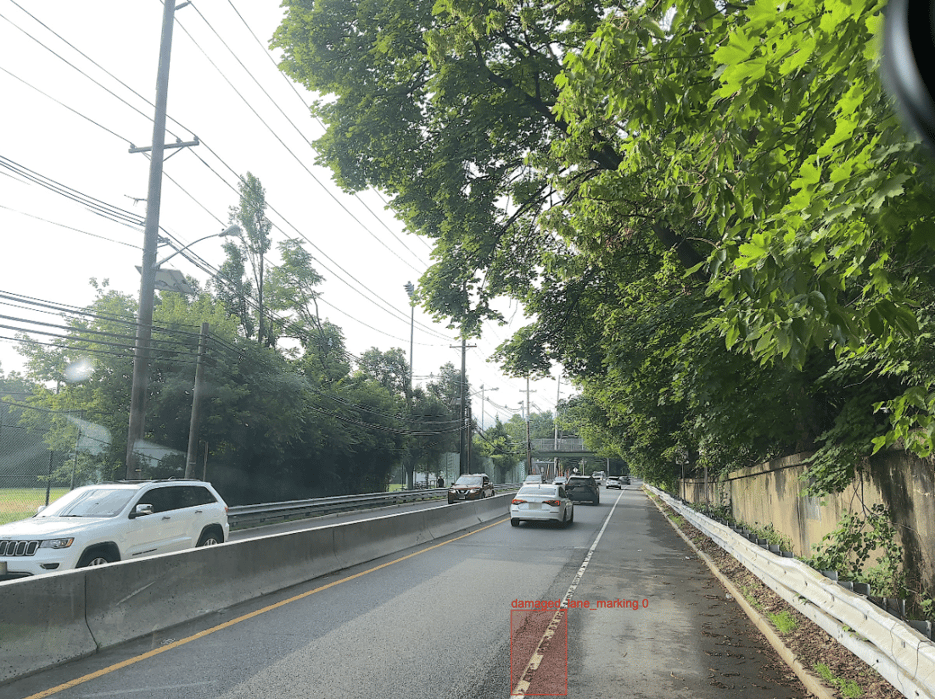
Using a smartphone mounted in a municipal vehicle, vialytics captures roadway imagery during routine drives. No separate pavement marking survey or specialized hardware is required. vialytics then uses computer vision to detect significantly damaged pavement markings, including lane lines, directional arrows, stop bars, crosswalks, symbols, and roadway numbers.
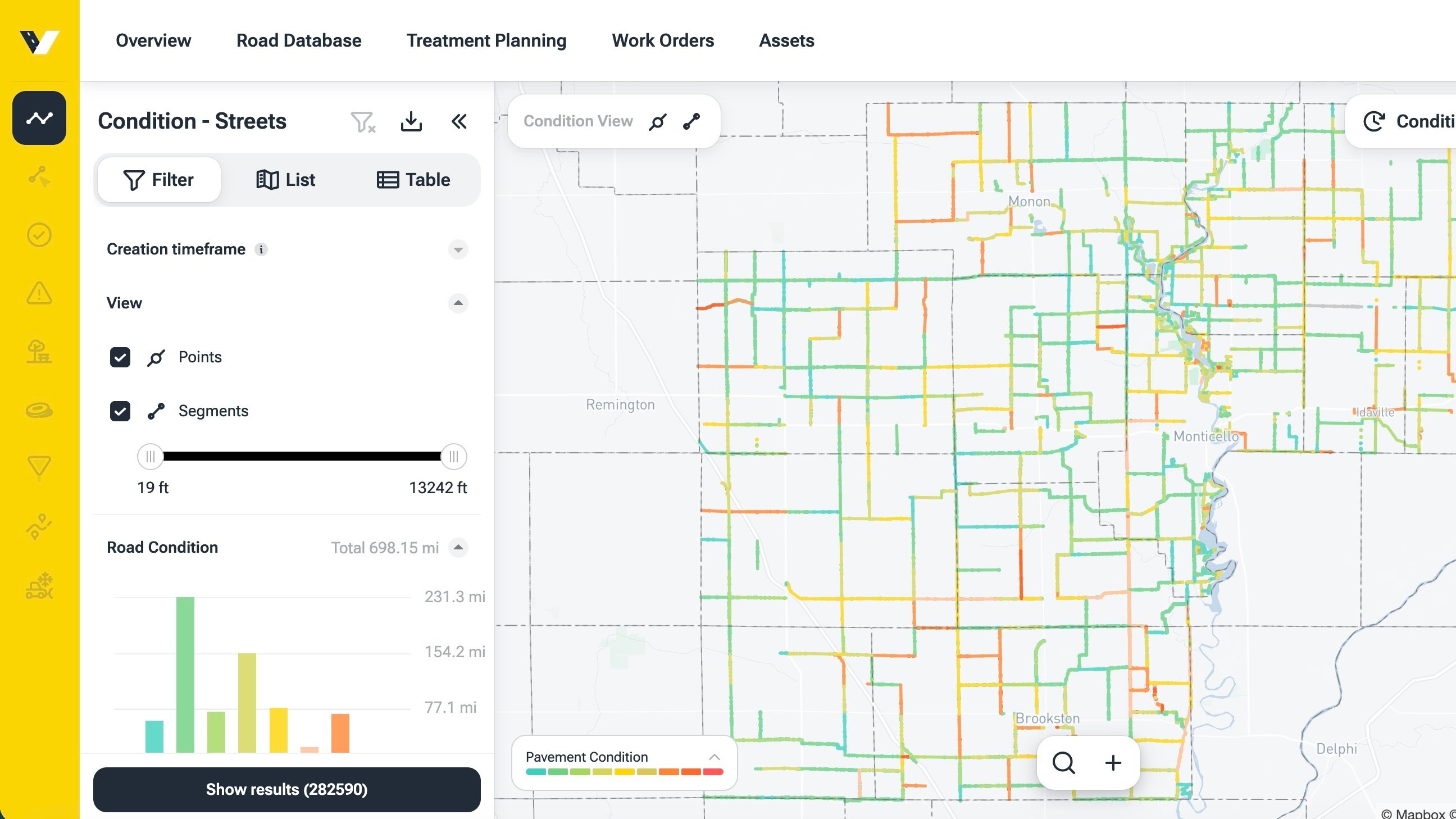
Within the vialytics web platform, detections are surfaced in the map and image view, where staff can review locations, verify conditions, and evaluate affected road segments in context. This gives agencies a more objective, image-based view of network-wide repainting needs and helps them prioritize maintenance more strategically.
From Detection to Action in One Workflow
With damaged pavement marking detections available in the same system used for road management, municipalities can move more easily from identification to action. Teams can use the information to prioritize corridors, create clearer scopes of work, and coordinate with internal crews or external contractors using location-specific condition data.
This also supports more informed budget and planning discussions. Instead of relying on anecdotal observations alone, public works leaders can use documented roadway conditions to explain repainting priorities, support funding requests, and plan maintenance more proactively.
A More Efficient Approach to Pavement Marking Maintenance
Damaged pavement markings are easy to miss when inspections depend on manual reviews alone. But when cities can identify deteriorated markings during routine roadway data collection, they gain a more current and consistent understanding of network-wide need.
With vialytics, municipalities can detect damaged pavement markings, review them in context, and use that information to support safer roads, clearer maintenance planning, and better-informed budget decisions.
About vialytics
vialytics provides AI-powered road management software that helps municipalities assess road conditions, prioritize repairs, and make smarter infrastructure decisions.
Used by over 1,000 municipalities worldwide, vialytics enables public works teams to collect standardized condition data, streamline maintenance planning, and clearly communicate needs for budgeting, grants, and long-term planning.
For more information, visit www.vialytics.com
Share this

Linne CSD: 2025 RoadStar Planning Master

The Case for AI-Powered Infrastructure Management